
Online publication on the socialist mural on Palace of Culture
The mural “Path of the Red Flag” at the Dresden Kulturpalast, The Palace of Culture, represents both: an aspired as well as a failed concept of society. In 2019, on the occasion of the 50th anniversary of the Kulturpalast, we wanted to know what the visitors of the Bautzner Straße Memorial think about it. We enjoyed and collected these shared thoughts.
Here we present the mural and its meanings. You may find a more profound booklet on the project website.
If you scroll to the bottom of the linked page, you will find the cover page and can start flipping pages on the upper right-hand side corner.
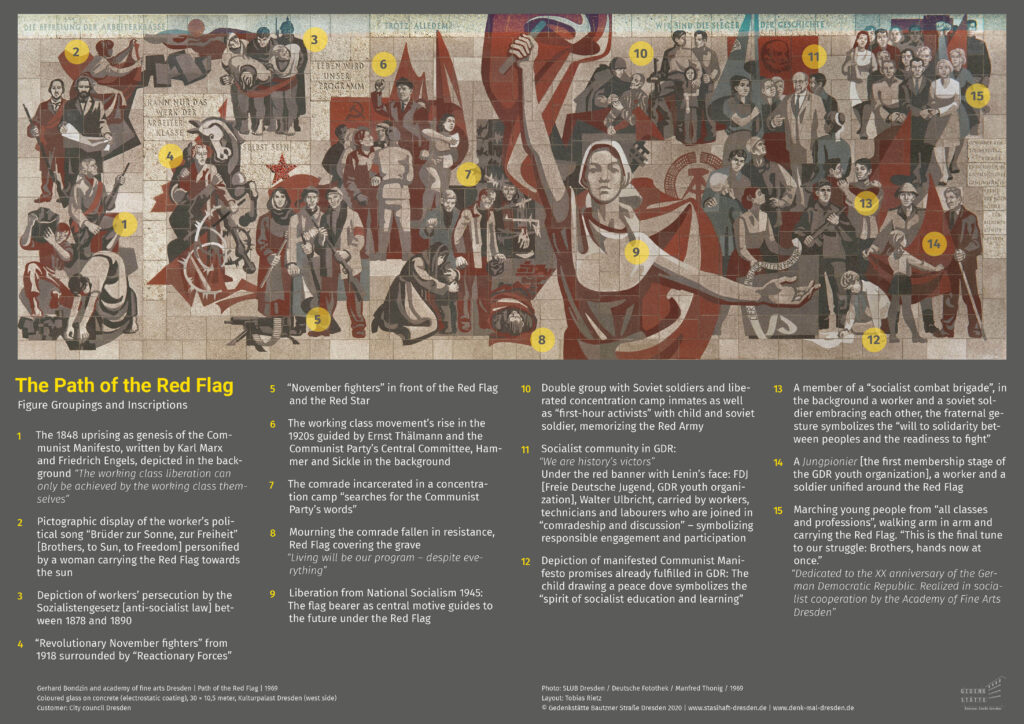
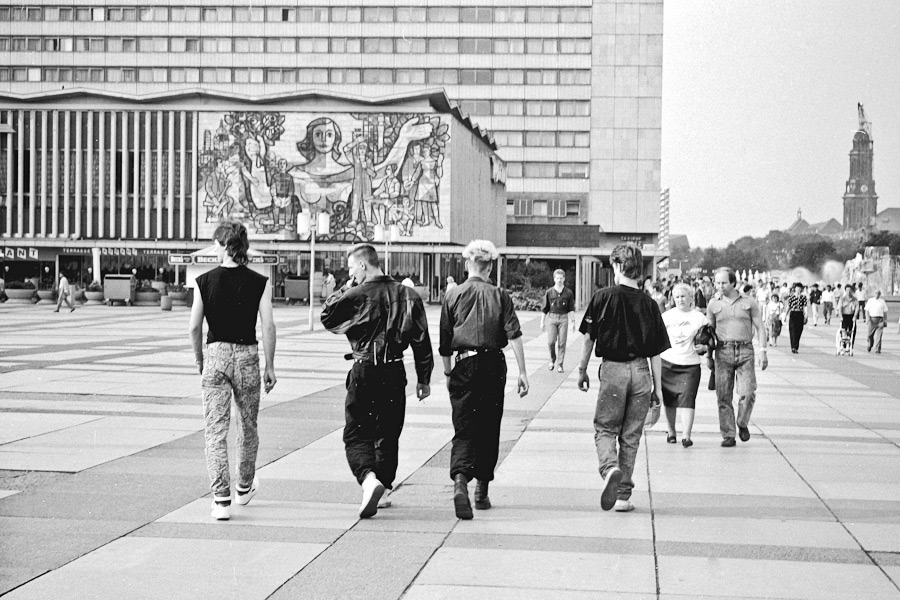
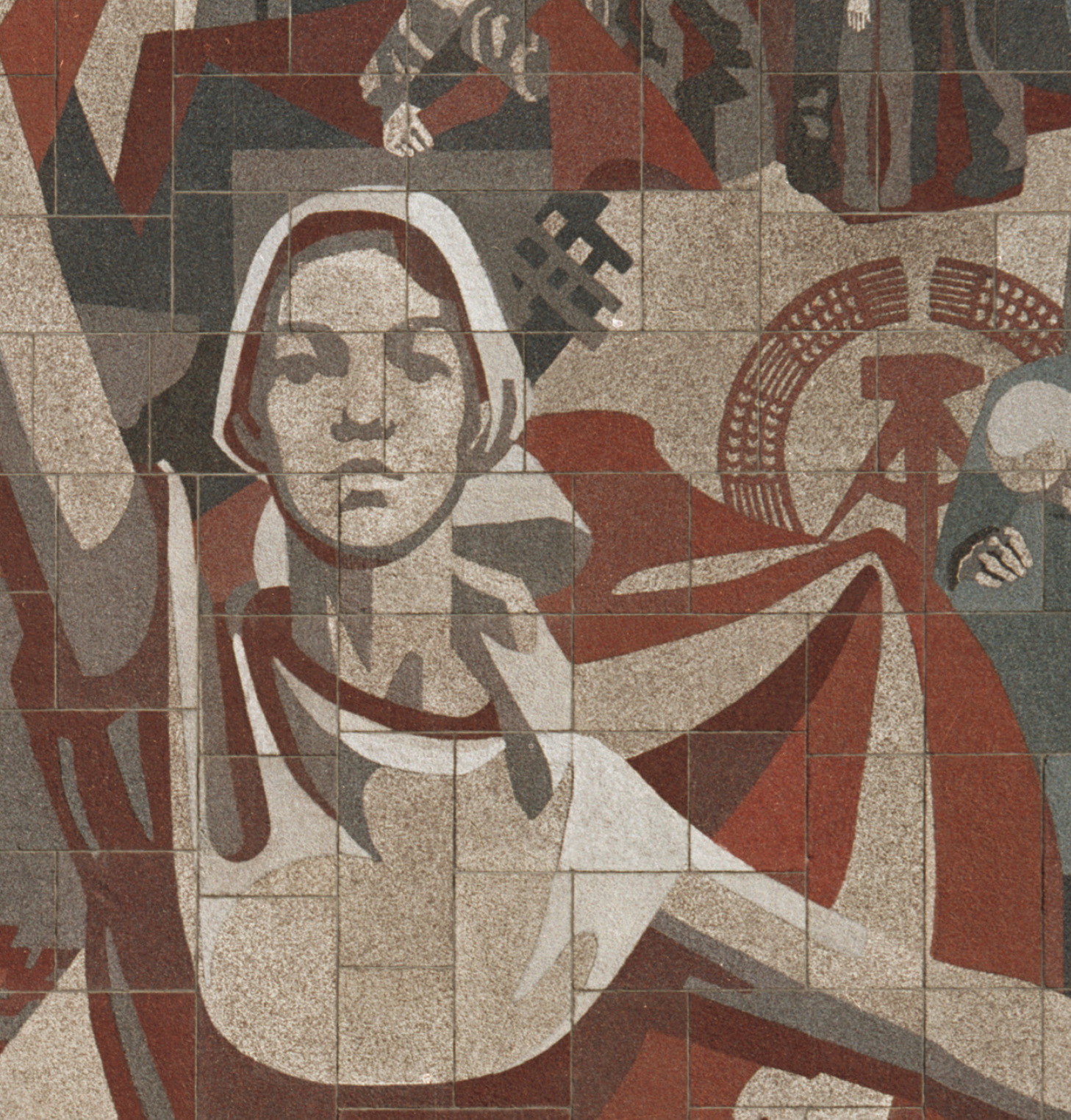
The 30-metre-long mural was one of the most important large-scale commissions of art on buildings in the GDR and is today one of the most important examples of socialist monumental art.
The mural represents the GDR through the context of a historical image based on the methodology of Historical Materialism. It is an expression of socialist optimism about the future. In 1989 however, unfulfilled socio-political utopias fueled opposition against the system. The discussion about the mural, which began soon after the Peaceful Revolution, concentrated above all on the object’s cult and symbolic value and the ideology embedded within it.
It is therefore hardly surprising, that after the dismantling of the Lenin monument at Dresden’s Main Station, the “Red Flag” became the most controversial visual art object in Dresden’s urban space. On the other hand, this is precisely why “Path of the Red Flag” stimulates debates about Dresden’s cultural memory.
In this context, it is about local identities and experienced history- the arrival of the past into the present with a view to the future.